


Ljubica Matic Group
Translational Vascular Medicine
About
The Translational Vascular Medicine group has been established and led since 2019 at CMM by Ljubica Matic. The group works under the umbrella of Vascular Surgery, a large unit at Karolinska built over the past 55 years between the Vascular Surgery Clinic and Vascular Surgery Research, where Ljubica Matic acts as one of the senior PIs.
The group is devoted to translational research on novel therapeutic and diagnostic targets for management of cardiovascular disease (CVD), specifically atherosclerosis and restenosis. Atherosclerosis is the major aetiology behind CVD, leading to high mortality due to plaque rupture, myocardial infarction and stroke. Despite decades of research, there are still no biomarkers for prediction of rupture events, nor targeted therapies to alleviate plaque burden in patients, highlighting an urgent clinical need.
The Translational Vascular Medicine is a hybrid group composed of researchers with expertise in molecular/cell biology, pharmacology, animal models, biobanking, bioinformatics, biostatistics, AI-driven multi-modal data analyses, clinically active vascular surgery staff and nurses. Together, the team applies integrative analyses combining patient data with experimental and murine models of vascular injury and disease, to discover and characterise novel therapeutic and diagnostic targets for patients with atherosclerosis.
Research
We are dedicated to translational research on novel therapeutic and diagnostic targets for the management of peripheral vascular disease, specifically atherosclerosis and restenosis complications. We utilize innovative, integrated multi-omics in silico pipelines for exploration of large human vascular disease biobanks with an aim to identify mechanisms and smooth muscle cell related targets that stand in direct causal relationship to human vascular disease.
To this end, we have been developing large biobank resources for vascular disease studies, e.g. the Biobank of Karolinska Endarterectomy (BiKE, est 2002), Biobank of lower limb Peripheral Arterial Disease (BiKPAD, est 2025), Biobank of Karolinska Smooth Muscle Cells (BiKSMC, est 2024) and Biobank of Rat Carotid Artery injury (BiRCA, est 2012). Target discovery using these biobanks is followed by phenotyping, challenge and proof-of-concept interventional studies in murine vascular injury and disease models, as well as in vitro studies using primary human vascular cells. We operate a fully equipped animal lab at the KMB premises, holding top-level expertise in vascular microsurgery, drug delivery, longitudinal non-invasive follow-up, etc. We also have expertise in complex immunopathological studies of human vascular tissues, functional and mechanistic cell culture studies and differentiation protocols, etc.
With this multi-disciplinary approach, our mission is to create a powerful platform for extrapolation of fundamental research results into the various realms of clinical cardiovascular disease coupled to innovation, leading to accelerated development from target discovery to patient treatment.
Group Leader
Ljubica Matic, MSc, PhD, Assoc Prof, Principal Researcher, https://ki.se/en/people/ljubica-matic, Ljubica.Matic@ki.se

About the Group leader
Ljubica Matic earned her MSc in Molecular Biology from the University of Belgrade, Serbia and PhD in Medical Biochemistry from Karolinska Institutet. Today, she is internationally recognized for pioneering the use of artificial intelligence and multimodal patient data, combined with experimental models, to identify new therapeutic targets that can be translated into improved cardiovascular patient care. Partnering with clinical vascular surgery, she has developed some of the largest biobanks of patients with atherosclerosis, providing a unique foundation for translational cardiovascular research worldwide. Her team collaborates closely with pharmaceutical industries, using various innovation paths to accelerate the journey from scientific discovery to new treatments.
As respected leader and author in cardiovascular science, Dr. Matic has received numerous prestigious national and international awards, e.g. from the American Heart Association, European Society of Cardiology, Swedish Research Council, The Royal Swedish Academy of Sciences, Swedish Society for Medical Research and the Swedish Heart-Lung Foundation. She serves on multiple scientific committees and research funding agencies across Europe, leads several large EU and transatlantic research consortia (e.g. EU Horizon, Leducq, La Caixa), and holds editorial roles in Atherosclerosis and Vascular Pharmacology journals. Dr. Matic is also an internationally engaged speaker, who advocates for the responsible use of patient data and implementation of human biobanking, along with the reduction and replacement in animal experimentation.
Passionate about education, Dr. Matic has taught and mentored students at Karolinska Institutet for over two decades. She directs PhD training in Vascular Cell Biology, serves as Associate Director of the Global Master’s Programme in Biomedicine, and develops advanced international training courses, helping educate the next generation of cardiovascular scientists.
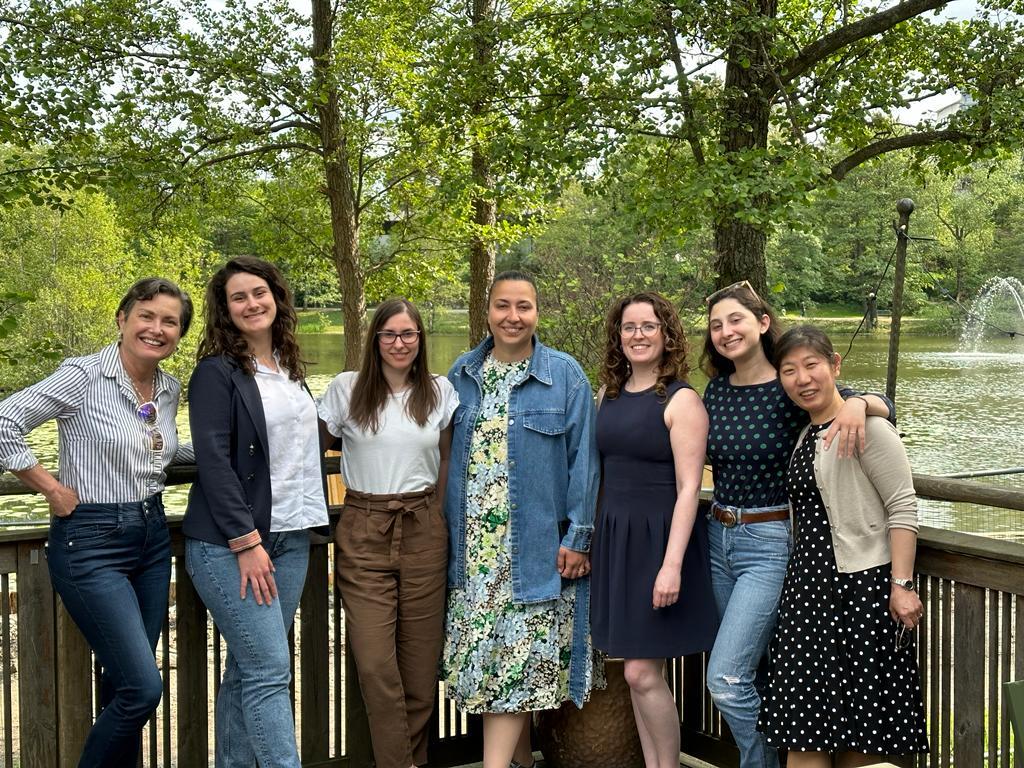
Group members
Ljubica Matic, MSc, PhD, Assoc Prof, Principal Researcher, Group Leader, https://ki.se/en/people/ljubica-matic, Ljubica.Matic@ki.se
Sofija Sundman, MSc, PhD student, sofija.sundman@ki.se
Stefan Stoisavljevic, MD, PhD student, stefan.stoisavljevic@ki.se
Melody Chemaly, PharmD, PhD, Research Specialist Melody.Chemaly@ki.se
Hong Jin, MD, PhD, Senior Research Specialist, Animal Lab Manager Hong.Jin@ki.se
Moiz Sherwani, PhD, Postdoctoral Researcher, moiz.sherwani@ki.se
Katarina Wadén, DMDS, MD, PhD, Associated Researcher Katarina.Waden@ki.se
Eva Hurt-Camejo, PhD, Adjunct Prof Eva.Hurt-Camejo@ki.se
Alumni
Glykeria Karadimou, PhD, affiliated to research
Sampath Narayanan, PhD
Urszula Rykaczewska, PhD
Bianca Suur, PhD
Nikolaos Taxiarchis-Skenteris, PhD
Xiang Zhang, PhD
Selected publications
- Narayanan S, Vuckovic S, Bergman O, Wirka R, Verdezoto Mosquera J, Chen QS, Baldassarre D, Tremoli E, Veglia F, Lengquist M, Aherahrrou R, Razuvaev A, Gigante B, Björck HM, Miller CL, Quertermous T, Hedin U, Matic L. Atheroma transcriptomics identifies ARNTL as a smooth muscle cell regulator and with clinical and genetic data improves risk stratification. Eur Heart J. 2025 Jan 16;46(3):308-322. doi: 10.1093/eurheartj/ehae768. Erratum in: Eur Heart J. 2025 Apr 7;46(14):1303. doi: 10.1093/eurheartj/ehaf107. PMID: 39552248; PMCID: PMC11735083. https://pubmed.ncbi.nlm.nih.gov/39552248/
- Rykaczewska, U; Suur, BE; Röhl, S; Razuvaev, A; Lengquist, M; Sabater-Lleal, M; van der Laan, SW; Miller, CL; Wirka, RC; Kronqvist, M; Gonzalez Diez, M; Vesterlund, M; Gillgren, P; Odeberg, J; Lindeman, JH; Veglia, F; Humphries, SE; de Faire, U; Baldassarre, D; Tremoli, E; Lehtiö, J; Hansson, GK; Paulsson-Berne, G; Pasterkamp, G; Quertermous, T; Hamsten, A; Eriksson, P; Hedin, U; Matic, L. PCSK6 Is a Key Protease in the Control of Smooth Muscle Cell Function in Vascular Remodeling. Circulation Research 126;571-585.5 (2020, JIF 23.2, featured in an editorial and journal cover page). https://www.ncbi.nlm.nih.gov/pubmed/31893970
- Rykaczewska, U; Zhao, Q; Saliba-Gustafsson, P; Lengquist, M; Kronqvist, M; Bergman, O; Huang, Z; Lund, K; Waden, K; Pons Vila, Z; Caidahl, K; Skogsberg, J; Vukojevic, V; Lindeman, JHN; Roy, J; Hansson, GK; Treuter, E; Leeper, NJ; Eriksson, P; Ehrenborg, E; Razuvaev, A; Hedin, U; Matic, L. Plaque Evaluation by Ultrasound and Transcriptomics Reveals BCLAF1 as a Regulator of Smooth Muscle Cell Lipid Transdifferentiation in Atherosclerosis. ATVB 42;659-676.5 (2022, JIF 10, featured as the best paper of the month and year). https://pubmed.ncbi.nlm.nih.gov/35321563/
- Das V, Narayanan S, Zhang X, Bergman O, Djordjevic D, Kronqvist M, Chemaly M, Karadimou G, Sundman S, Prasad I, Buckler AJ, Knape KC, Michaelsen NB, Hedin U, Matic L. Multi-omics data integration from patients with carotid stenosis illuminates key molecular signatures of atherosclerotic instability. Genome Med. 2026 Feb 6;18(1):25. doi: 10.1186/s13073-026-01601-5. PMID: 41652626; PMCID: PMC12927228. https://pubmed.ncbi.nlm.nih.gov/41652626/
- Kojima, Y; Volkmer, JP; McKenna, K; Civelek, M; Lusis, AJ; Miller, CL; Direnzo, D; Nanda, V; Ye, J; Connolly, AJ; Schadt, EE; Quertermous, T; Betancur, P; Maegdefessel, L; Matic, LP; Hedin, U; Weissman, IL; Leeper, NJ. CD47-blocking antibodies restore phagocytosis and prevent atherosclerosis. Nature 536;86-90.7614 (2016, JIF 69.5, among top 5% citations, featured in an editorial). https://pubmed.ncbi.nlm.nih.gov/27437576/
- Stellos K, Gatsiou A, Stamatelopoulos K, Perisic Matic L, John D, Lunella FF, Jaé N, Rossbach O, Amrhein C, Sigala F, Boon RA, Fürtig B, Manavski Y, You X, Uchida S, Keller T, Boeckel JN, Franco-Cereceda A, Maegdefessel L, Chen W, Schwalbe H, Bindereif A, Eriksson P, Hedin U, Zeiher AM, Dimmeler S. Adenosine-to-inosine RNA editing controls cathepsin S expression in atherosclerosis by enabling HuR-mediated post-transcriptional regulation. Nat Med. 2016 Oct;22(10):1140-1150. doi: 10.1038/nm.4172. Epub 2016 Sep 5. PMID: 27595325. https://pubmed.ncbi.nlm.nih.gov/27595325/
- Waden K, Hultgren R, Kotopouli MI, Gillgren P, Roy J, Hedin U, Matic L. Long Term Mortality in Patients Treated with Carotid Endarterectomy. European journal of vascular and endovascular surgery. 2023 Jun; 65(6):778-786. (2023, JIF 6.43) https://pubmed.ncbi.nlm.nih.gov/36871924/
- Matic LP, Jesus Iglesias M, Vesterlund M, Lengquist M, Hong MG, Saieed S, Sanchez-Rivera L, Berg M, Razuvaev A, Kronqvist M, Lund K, Caidahl K, Gillgren P, Pontén F, Uhlén M, Schwenk JM, Hansson GK, Paulsson-Berne G, Fagman E, Roy J, Hultgren R, Bergström G, Lehtiö J, Odeberg J, Hedin U. Novel Multiomics Profiling of Human Carotid Atherosclerotic Plaques and Plasma Reveals Biliverdin Reductase B as a Marker of Intraplaque Hemorrhage. JACC Basic Transl Sci. 2018 Aug 1;3(4):464-480. doi: 10.1016/j.jacbts.2018.04.001. PMID: 30175270; PMCID: PMC6115646. https://www.sciencedirect.com/science/article/pii/S2452302X18300962
- Matic L, Blomquist P, Devaux Y. Pros and cons of Swedish law on intellectual property rights. Eur Heart J. 2026 Jun 16;47(23):2888-2890. doi: 10.1093/eurheartj/ehag083. PMID: 41823438. https://academic.oup.com/eurheartj/article/47/23/2888/8519183
- Perisic, L; Aldi, S; Sun, Y; Folkersen, L; Razuvaev, A; Roy, J; Lengquist, M; Åkesson, S; Wheelock, CE; Maegdefessel, L; Gabrielsen, A; Odeberg, J; Hansson, GK; Paulsson-Berne, G; Hedin, U. Gene expression signatures, pathways and networks in carotid atherosclerosis. Journal of Internal Medicine 279; 293-308.3 (2016, JIF 13, among top 5% cited publications) https://pubmed.ncbi.nlm.nih.gov/26620734/